Artist Profile

Work of the Week: Remembering Joan Stebbins

Sticky at top of newsfeed
No
Article teaser

In remembrance of Joan Stebbins, former Director and Curator of the Southern Alberta Art Gallery who passed away on December 13, 2025, we share her artwork “Heart Attacks.”

Body

Joan Stebbins, former Director and Curator of the Southern Alberta Art Gallery Maansiksikaitsitapiitsinikssin (SAAG), passed away on December 13, 2025 at the age of 84.

Joan had been involved with SAAG beginning in 1979 shortly after the Gallery opened to the public. She worked her way through the organization and became Director / Curator in 1985 and served in that position until her retirement in 2007. Her leadership has been credited with the gallery being viewed as one of the country’s leading contemporary arts institutions.

Throughout Joan’s career, she has received a number of honours, which include The Lieutenant Governor of Alberta Distinguished Artists award, a Member of the Order of Canada, an honorary Doctor of Fine Arts degree from the University of Lethbridge, and an RCA Medal from the Royal Canadian Academy of Arts.

To honour the memory of Joan Stebbins and her invaluable contributions to the visual arts, we present her artwork, Heart Attacks (1979), which is part of the Collection of the Alberta Foundation for the Arts.

Facebook title
Work of the Week: Remembering Joan Stebbins
Facebook description

In remembrance of Joan Stebbins, former Director and Curator of the Southern Alberta Art Gallery who passed away on December 13, 2025, we share her artwork “Heart Attacks.”

Twitter title
Work of the Week: Remembering Joan Stebbins
Twitter description

In remembrance of Joan Stebbins, former Director and Curator of the Southern Alberta Art Gallery who passed away on December 13, 2025, we share her artwork “Heart Attacks.”

Button text
AFA Virtual Museum
Art discipline
Location
Social Media Preview
Drawings of hearts and circles with the letter X drawn through some of them laid out in three rows over a white background.
Collections Database Image
Image
Drawings of hearts and circles with the letter X drawn through some of them laid out in three rows over a white background.
Artist
Joan Stebbins
Title
Heart Attacks
Year
1979
Medium
etching on paper
Collections Images Slideshow
Drawings of hearts and circles with the letter X drawn through some of them laid out in three rows over a white background.
Joan Stebbins
Heart Attacks
1979
etching on paper

Work of the Week: Remembrance Day and Indigenous Veterans Day 2025

Sticky at top of newsfeed
No
Article teaser

In commemoration of Remembrance Day (November 11) and Indigenous Veterans Day (November 8), we feature two pieces depicting army camps during World War II.

Body

This week, our thoughts turn to remembrance, honouring both Indigenous Veterans Day (Nov 8) and Remembrance Day (Nov 11). In recognition of these days of remembrance, we are honoured to feature two artworks from the AFA Art Collection produced by Euphemia McNaught and Evelyn McBryan.

These two paintings from 1942 "Army Camp, Charlie Lake" by Evelyn McBryan and "US Army Camp Sept. Charlie Lake BC" by Euphemia McNaught, capture a single, pivotal moment in Canada's WWII history. They depict the U.S. Army camp at Charlie Lake, B.C., a hub for one of the most significant engineering projects of the war, the construction of the Alaska Highway.

In the aftermath of Pearl Harbour, Canada played host to over 10,000 U.S. soldiers that arrived in the north to build this critical inland supply route. Receiving an unprecedented commission directly from Prime Minister Mackenzie King, McNaught and McBryan, were two of the only civilians—and women—granted official permission to enter the highly restricted military zone. They became unofficial war artists. While not on the front lines they documented the construction of this massive, high-speed military project.

Dedicated to completing their commission the duo would go as far to disguise themselves as men, as women weren’t permitted on the sites they needed to access. Together, McNaught and McBryan were able to produce 34 paintings from 1942 to 1944.

But this is not the only story.

What the works also depict is the arrival of thousands of soldiers on the traditional lands of the Dene, Saulteau, Kaska, and other First Nations. Completion of this monumental project, built in response to the threat of invasion, would not have been possible without the key knowledge of Indigenous guides, trappers, and community members. They were the ones who knew the "unexplored" terrain, the muskeg, and the river crossings, enabling the U.S. Army to navigate the challenging northern landscape.

The Alaska Highway project would forever alter these unceded lands affecting the Indigenous communities and wildlife that called the area home.

As we look at these paintings, we see a layered history. We honour all who served and sacrificed in times of conflict. We remember the soldiers who built this highway and the artists who documented it, the critical role of Indigenous peoples and the impact of the highway forever changing the landscape.

About the Artworks

The Alaska Highway Series consists of 34 paintings and was a cooperative effort between Euphemia McNaught and Evelyn McBryan. During 1942 to 1944, both artists travelled along the Alaska Highway as far as the Sikanni River, documenting through sketches and paintings the construction of the highway.

About the artists

The relationship between Euphemia "Betty" McNaught and Evelyn "Evy" McBryan was a multi-layered, lifelong connection that began with McNaught as the teacher and McBryan as her art student in the Peace River region. This mentorship evolved into a close personal friendship and a significant professional collaboration. Together, they became the foundational figures of their local art scene, establishing the Beaverlodge and Grande Prairie Art Clubs. Their most famous project is the commission from Prime Minister Mackenzie King in 1942.


Facebook title
Work of the Week: Remembrance Day and Indigenous Veterans Day 2025
Facebook description

In commemoration of Remembrance Day (November 11) and Indigenous Veterans Day (November 8), we feature two pieces depicting army camps during World War II.

Twitter title
Remembrance Day and Indigenous Veterans Day 2025
Twitter description

In commemoration of Remembrance Day (November 11) and Indigenous Veterans Day (November 8), we feature two pieces depicting army camps during World War II.

Button text
AFA Virtual Museum
Art discipline
Social Media Preview
Collections Database Image
Collections Images Slideshow
Euphemia McNaught
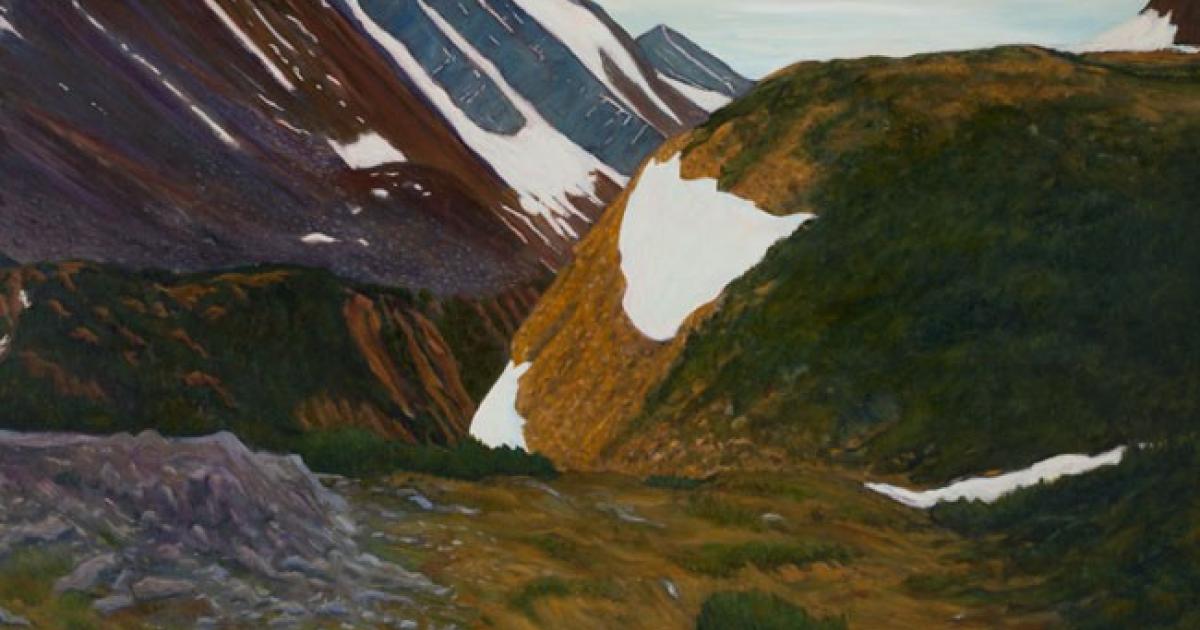
Army Camp, Charlie Lake
n.d.
tempera on cardboard
Evelyn McBryan
U.S. Army Camp (Sept.)
1942
watercolour on canvas paper

Born to Be Blue - Dick Der

Sticky at top of newsfeed
No
Article teaser

Dick Der's artwork, Born to Be Blue, is featured in the AFA art house in downtown Calgary as part of the New Views exhibition

Body

Born to Be Blue is part of a new series that deals with creating an illusion of depth and space with the use of color and drawing.

This piece was added to the AFA Art Collection in 2024 and is currently part of the New Views exhibition at the AFA art house in Calgary. It is currently featured on the art house "New Acquisitions" wall, which will be updated regularly with new works from the AFA Art Collection.

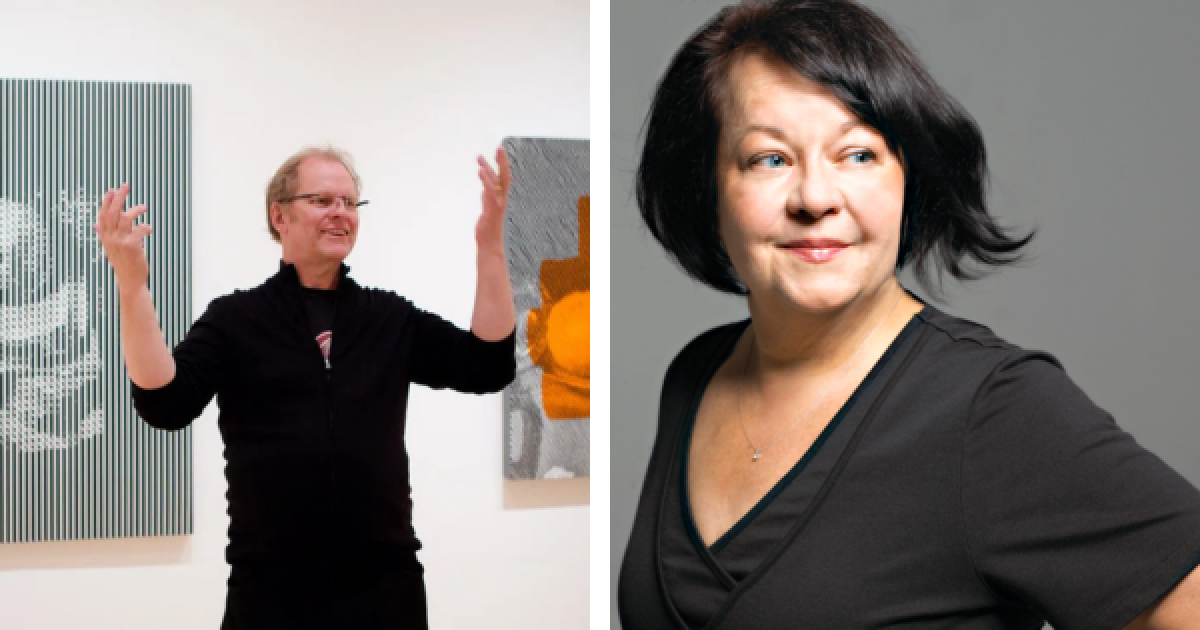
Artist Dick Der (left) poses next to his Born to Be Blue artwork alongside Jean Der (left)
Artist Dick Der (right) poses next to his artwork, Born to Be Blue, next to Jean Der (left).

About the Artist

Dick Der was born in China and moved to Canada as a child. He graduated from the University of Alberta in 1974, earning his BFA. 

According to the late arts journalist Gilbert Bouchard, Der possesses a “love of all things urban” that he expresses through “geometric works [that] depict abstract inner-city vistas [and] boast actual objects salvaged from downtown streets—metal rods, lengths of wire, hunks of rebar, bits of wood, cardboard, and squares of metal screen.” Such materials, said Bouchard, demonstrate “Der’s particular love of more derelict aspects of city life—old buildings and abandoned warehouses… [and] aged portions of legendary cosmopolitan megacities [such as] New York or Paris.”

Der says he aims at evoking a “tranquil, mystical, and spiritual experience” through his mixed-media collages and paintings, which may also contain Chinese calligraphy whose meanings he does not intend to be taken literally, but whose forms suggest a “connection between the past, present, and future.” 

Der’s solo exhibitions in Edmonton include Studio Watch at the Edmonton Art Gallery, In the Rough at The Works Festival, and Chinatown Tango and Snapshots at the Scott Gallery in Edmonton. Several public, corporate, and private collections house Der’s work, including those of the Grand Prairie College, the Alberta Foundation for the Arts, the Camino Foundation, Anglo Continental Limited in Hong Kong, and the Singapore Eromatic Company. Der recently retired from the Department of Art and Design, Painting Division, at the University of Alberta. 


Facebook title
Born to Be Blue - Dick Der
Facebook description

Dick Der's artwork, Born to Be Blue, is featured in the AFA art house in downtown Calgary as part of the New Views exhibition

Twitter title
Born to Be Blue - Dick Der
Twitter description

Dick Der's artwork, Born to Be Blue, is featured in the AFA art house in downtown Calgary as part of the New Views exhibition

Button text
AFA Virtual Museum
Art discipline
Location
Social Media Preview
Installation photo of an artwork by Dick Der, Born to Be Blue, 2024 acrylic on canvas Collection of the Alberta Foundation for the Arts
Collections Database Image
Collections Images Slideshow
Installation photo of an artwork by Dick Der, Born to Be Blue, 2024 acrylic on canvas Collection of the Alberta Foundation for the Arts
Dick Der
Installation view of Born to Be Blue
2024
acrylic on canvas